Forage based beef systems at CAFRE
Date published:
The importance of forage management in beef systems will be discussed at the Beef Conference hosted by the College of Agriculture, Food and Rural Enterprise (CAFRE) and the Ulster Farmers’ Union.
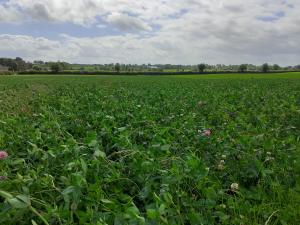
Robert Patterson, Forage Technologist, CAFRE highlights the importance of forage management in CAFRE’s beef enterprises. CAFRE’s forage-based systems will be discussed during a farm visit, following the technical Beef Conference at Greenmount Campus, Antrim on Wednesday 10 June 2026; Driving productivity, delivering sustainability – Achieving economic and environmentally sustainable beef systems.
“Maximising the proportion of forage in the diet, forage utilisation and nutrient use efficiency to drive animal performance, is the focus across the beef enterprises on the CAFRE Beef and Sheep Centre,” comments Robert Patterson, Forage Technologist at CAFRE.
The Beef and Sheep Centre comprises 120 hectares of grassland and is home to a range of beef systems including 100 stabiliser suckler cows, producing bull and heifer beef, steer and heifer beef from CAFRE’s Hill Farm Centre and dairy bred beef from the CAFRE dairy enterprise. Swards are routinely measured, with grass budgeted and allocated to all groups of stock through rotational/paddock grazing systems.
“The aim of the CAFRE beef enterprise is to convert our highest quality and cheapest feed resources, grazed grass and high-quality silage, into saleable high-quality proteins. The inputs required to achieve these goals have been examined over the past few years. Significant work has gone into clover establishment and as a result, inorganic Nitrogen use has fallen, contributing to the enterprises economic and environmental sustainability”, explains Robert Patterson.
The incorporation and utilisation of clover has the potential to significantly reduce the need for chemical nitrogen (N) inputs, increase nitrogen use efficiency (NUE) and improve animal performance on many farms in Northern Ireland.
White clover is particularly suited to grazing swards and can convert atmospheric nitrogen to a plant available form of nitrogen, supplying up to 200 kg N/ha per year from 12 - 18 months after establishment. The aim of the CAFRE clover project has been to reduce chemical N applications, whilst maintaining grass dry matter (DM) production, improve sward quality and increase animal performance at grass through increased intakes.
Red clover has an important role to play in reducing the dependency of silage production on inorganic nitrogen use. Red clover has an increased crude protein content, compared with conventional grass swards, and is one of the most consistent and reliable sources of home-grown protein. Additionally, red clovers increased palatability leads to higher animal intakes and possesses drought tolerance qualities.
At the event we will discuss the benefits that integrating clover into the CAFRE swards has had. You will hear which methods of clover establishment have been used on the CAFRE farms and how they have performed. The practical challenges encountered with establishing and managing the clover swards will be shared, and how these challenges have been addressed.
New and exciting projects happening in this area at CAFRE, including herbal leys and NEU-Leg, a novel legume-genetics project will also be discussed.
To hear more about the role of forage management at CAFRE’s Beef and Sheep Centre, come along to the Beef Conference on Wednesday 10 June at Greenmount Campus, Antrim. The conference runs from 9:30am to 5:00pm, with a technical session of industry expert speakers followed by the farm visit after lunch.
If you are unable to attend the conference during the day, please join us at the farm visits running in the evening from 6:00pm to 7:30pm. For more information and to register to attend, please visit the CAFRE website.
Notes to editors:
- Follow DAERA on X formerly called Twitter and Facebook.
- All media queries should be directed to the DAERA Press Office: pressoffice.group@daera-ni.gov.uk or telephone: 028 9016 3460.