Heat stress – an overlooked threat to dairy cow fertility
Date published:
Fertility challenges in dairy herds are often linked to energy balance, nutrition and genetics. However, heat stress is an increasingly important factor affecting the ability to get cows back in calf, even under Northern Ireland conditions, explains Emma Neville, CAFRE Dairy Adviser.
While heat stress is often associated with extreme temperatures, even moderate increases in temperature and humidity can have a significant impact. High-yielding dairy cows, particularly those producing 35 - 50 litres per day, generate large amounts of metabolic heat and can begin to experience heat stress at temperatures as low as 18 - 20°C. This makes them vulnerable well before conditions feel uncomfortable for humans.
Heat stress occurs when there is an imbalance between heat production and heat loss. As dairy cows have a limited ability to dissipate excess body heat, rising temperatures result in increased respiration rates, reduced feed intake and elevated body temperature. These changes not only impact milk yield and quality but also have serious consequences for fertility.
Impact on fertility
Heat stress disrupts several key reproductive processes, leading to reduced conception rates during the summer months. Elevated body temperature interferes with normal reproductive function which is turn results in impaired follicle development, reduced oestrous behaviour, delayed ovulation and oocyte quality decline.
Collectively, these effects lead to poorer conception rates and increased embryonic loss with high-yielding cows particularly vulnerable due to their greater metabolic heat load.
One thing to note is the effects of heat stress are not short-lived as research has shown that it can take two to three cycles for quality to recover following a bout of stress. This helps explain why reduced fertility is often seen in the autumn, even after temperatures are cooler.
Does heat stress matter in Northern Ireland?
Although Northern Ireland rarely experiences prolonged periods of very high temperatures, humidity levels are consistently high. Combined with a lack of adaptation to heat, this means cows can experience heat stress more frequently than you think. The Temperature-Humidity Index (THI) is a useful tool for assessing risk:
- THI < 68: No heat stress
- THI 68–72: Mild stress begins
- THI 80–90: Moderate to severe stress
- THI > 90: Severe stress
In practice, the threshold of 68 is easily exceeded on warm, humid days, particularly in poorly ventilated sheds.
Reducing the impact
Early detection of heat stress is essential. By observing key behavioural changes farmers can make timely management adjustments. Indicators include reduced dry matter intake of around 10 - 30%, increased water consumption, panting at a rate of 40 - 60 breaths per minute, reduced lying time, and cows clustering in shaded or cooler areas. Together, these changes reduce energy intake and increase stress levels, both of which have direct negative effects on fertility. Maintaining fertility during warmer periods therefore requires a proactive approach, with appropriate adjustments in both housed and grazing systems to minimise the impact of heat stress.
In fully housed herds, ventilation and airflow are critical with simple, cost-effective measures making a significant difference. Improving air movement within the shed, installing fans to increase air velocity, avoiding overcrowding, and ensuring constant access to clean, fresh water all help to reduce heat stress, while monitoring the THI using shed sensors or online tools allows anticipation of high-risk periods.
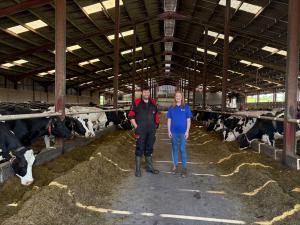
Feeding strategies should also be adapted, with an emphasis on offering high-quality, easily digestible rations, feeding during cooler parts of the day, and maintaining adequate fibre to support rumen health. Farmer Jonathan Gillespie from Killylea has implemented a range of these measures within his fully housed system; a change of roofing to help maintain lower shed temperatures, close monitoring of cow behaviour enables feeding times and ventilation to be adjusted in response to changing conditions.
Grazing systems are also impacted by heat stress especially if there is no shade present on high temperature high humidity days. Ensuring easy access to clean water at a high-pressure refill and positioning troughs to minimise walking distances and increase intakes will improve resilience to warm and humid conditions.
Conclusion
Heat stress has many negative impacts on dairy cows fertility from disrupting ovarian function and reduced oestrous expression to lower feed intakes overall decreasing conception rates and embryo survival. These physiological disruptions explain why conception rates fall during summer months even in temperate regions. However, by applying practical management strategies Northern Ireland farmers can minimise the impact and protect herd fertility into the breeding season.
Notes to editors:
- Follow DAERA on X formerly called Twitter and Facebook.
- All media queries should be directed to the DAERA Press Office: pressoffice.group@daera-ni.gov.uk or telephone: 028 9016 3460.