CAFRE and UFU Beef Conference will discuss efficient beef systems
Date published:
Dr Eileen McCloskey, Senior Livestock Technologist, at the College of Agriculture, Food and Rural Enterprise (CAFRE) highlights the beef finishing enterprises you will hear about during the farm visit which will follow the Technical Beef Conference at Greenmount Campus, Antrim on Wednesday 10 June 2026; Driving productivity, delivering sustainability – Achieving economic and environmentally sustainable beef systems.
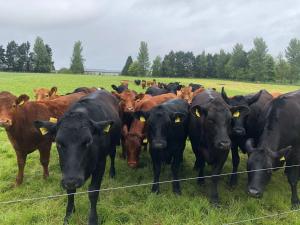
“Maximising performance, reducing days to slaughter, meeting market and policy specification from forage-based diets is the focus across the beef finishing enterprises on the CAFRE Beef and Sheep Centre,” comments Dr. Eileen McCloskey Senior Technologist at CAFRE.
The Beef and Sheep Centre comprises 120 hectares of grassland and is home to a range of beef systems including 100 stabiliser suckler cows, producing bull beef and heifer beef, from those not selected for breeding, steer and heifer beef from CAFRE’s Hill Farm Centre and dairy bred beef from the CAFRE dairy enterprise.
“The focus is on forage-based systems with precision nutrition, and high health status to ensure efficient performance, maximum feed efficiency, achieving target weight gain throughout their lifetime and reduced days to slaughter, these are the main drivers of both economic and environmental sustainability explains,” Dr. McCloskey.
Bull beef
The suckler herd begins calving mid-February with cows and calves turned out to grass, grazing through to late autumn. All male calves are kept entire, performance at grass from birth to weaning is a critical aspect of achieving lifetime targets. The average 200-day weight is 280 kg with an average DLWG of 1.2 kg during the grazing period. Post weaning, and at housing, the bulls move onto a high-quality silage-based ration supported by concentrate stepped up gradually from to 2 kg/day to 8 kg/day over a 90-day finishing period.
The average performance of the bulls is a liveweight of 650 kg, 58% kill out achieving a carcass weight of 380 kg grading R+/U- and fat class 3+ at 15 months of age. Lifetime daily liveweight gain of 1.3 kg with a total lifetime intake of 1.45 tonnes of concentrate feeding.
Steer beef
All male progeny from the suckler herd at the CAFRE Hill Farm Centre are finished at the Beef and Sheep Centre. After a period of transition post weaning, calves are moved on to the farm between 8-9 months of age at an average weight of 320 kg and go onto a high-quality silage diet during their first winter housed. At turnout the following spring the target weight is 390-400 kg.
During the second grazing season, steers are grazed on a paddock system ensuring high quality grass is always available. During the second winter, steers are offered high quality forage and concentrate starting at 2 kg transitioning to 6 kg, consuming 0.68 tonnes during the finishing period. This year the group finished at an average age of 20 months, lifetime daily liveweight gain of 1.0 kg, liveweight of 645 kg killing at 57% achieving a carcass weight of 370 kg grading at R 3+.
Replacement heifers and beef
Females not selected for breeding at either centres will be finished on the farm. After weaning, and when housed for the first winter, they are managed on good quality forage with 2 kg of concentrate; all heifers are managed towards target weight for breeding. At turnout for the second grazing season, at 12-13 months of age, they will be split based on those suitable for breeding with a target weight of 330-350 kg.
Heifers are grazed on a paddock system, offering high quality pasture to maximise performance at grass, followed by a short winter finishing period. Stabiliser bred heifers are finished at an average age of 20 months, 535 kg liveweight killing at 52% achieving a carcass weight of 285 kg. The heifers from the Hill Farm Centre, a mix of Limousin and Angus crosses, are finished at an average age of 21 months, 570 kg liveweight killing at 50% achieving a carcass weight of 310 kg grading at R 3+/4-.
Dairy beef
Angus cross calves born between November - December at the Dairy Centre, are managed from birth to weaning, focusing on colostrum, milk replacer intakes and rumen development to maximise lifetime performance.
Offering high quality grass and monitoring parasite challenge is critical during the first season, aiming to house the calves at 12 months old at approximately 340 kg. During the second winter calves are offered high quality silage and supplemented based on forage quality, with a target weight gain of 0.7-0.9 kg DLWG and turnout weight of 440 kg-460 kg. Average performance for the group is 635 kg liveweight achieving a carcass weight of 330 kg, grading at O+/O= fat class 3= average slaughter age of 24 months
Summary
Maximising performance and reducing days to slaughter, on a forage-based system requires meeting targets throughout the animal’s lifetime. This relies on a combination of pasture management, offering high quality forage, along with strategic supplementation, improved genetic ability and a high health status to deliver productive and sustainable beef systems.
To hear more about the CAFRE beef finishing systems, come along to the Beef Conference on Wednesday 10 June at Greenmount Campus, Antrim. The conference runs from 9:30 am - 5:00 pm, with a technical session of industry expert speakers followed by the farm visit after lunch. If you are unable to attend the conference during the day, please join us at the farm visits running in the evening from 6:00pm to 7:30pm.
For more information and to register to attend please visit the CAFRE website.
Notes to editors:
- Follow DAERA on X formerly called Twitter and Facebook.
- All media queries should be directed to the DAERA Press Office: pressoffice.group@daera-ni.gov.uk or telephone: 028 9016 3460.