Plan for successful weaning and housing of spring-born suckler calves
Date published:
Weaning can be a significant source of stress for suckler-bred calves and often coincides with housing, adding to the challenge. Nigel Gould, Beef and Sheep Adviser with the College of Agriculture, Food and Rural Enterprise (CAFRE) emphasises that effective planning for weaning and housing youngstock is key to reducing stress and health issues, helping to optimise animal performance.
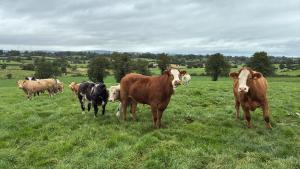
On some farms, weaning and housing takes place on the same day. While this can be easier in terms of labour, it is not recommended. Ideally, if calves are housed after weaning, it is advisable to wait at least one week. This allows time for the calves to adjust to their new environment and diet.
It is desirable to creep-feed calves for at least four weeks pre-weaning. This will help the rumen to adjust to concentrates in the diet and reduce a growth check after weaning. The level of concentrates offered will depend on calf type and the farm system. If these calves are to be kept and turned out to grass the following spring and current grass supply and quality is good, 2-3 kg/head/day is generally offered. This can be increased for well conformed continental bred bulls, destined for slaughter under 16 months of age. Target a concentrate with 16% crude protein and an energy content of 12.5 MJ/KG DM.
Reducing the cow-calf bond can be useful in reducing weaning related stress. One method which can help achieve this is creep grazing calves ahead of cows. This can be done simply by raising an electric wire or by using a creep gate. This can also facilitate creep feeding of concentrates. Calves will tend to move further away from the cows as time passes. It is also a way of increasing calf performance by giving them access to the best quality grass, while the cows can be used to graze out paddocks tight, weather and ground dependent.
Plastic nose flaps have also been gaining popularity in recent years. They are fitted to the calves for at least 1-2 weeks pre-weaning. Calves stay with their dams but are unable to suckle, which reduces the bond in advance of weaning.
Pneumonia can pose a risk around weaning time, particularly if calves are housed. Fluke and worm treatments should be administered 3-4 weeks pre-weaning, particularly if heavy parasite burdens are suspected. Lungworm burden in particular, will increase the risk of pneumonia. Consider Faecal Egg Count testing to get a better understanding of internal parasite burden on your farm. The main causes of pneumonia in calves are: Respiratory Syncytial Virus (RSV); Parainfluenza 3 (PI3); Bovine Herpes Virus Type 1 (BoHV-1, presenting as IBR); Mannheimia Haemolytica.
Vaccinations are available and it is generally recommended that the booster vaccines are administered at least two weeks prior to weaning. Monitor calves closely, especially at weaning and housing times and if any pneumonia symptoms are observed, treat promptly to limit its severity and spread.
Where practical, gradual weaning of a group of calves is preferred to abrupt weaning of all calves. Where cows and calves are outside, taking away a proportion of cows at a time can reduce stress levels, for example, 25% at a time over a two-week period.
Similar attention to detail needs to be practiced when housing calves for the first time. Ideally, house calves in dry weather and make sure housing is thoroughly cleaned and disinfected. The shed should be well ventilated and ensure fresh water is constantly available. Calves should be grouped by size and allocate numbers per pen based on the approximate weight or size the animals will be when leaving the shed.
Timing of post-housing treatments for parasites will depend on product used and previous treatment. Speak to your vet to ensure you are using the most appropriate treatment.
Successful weaning and housing requires careful planning and attention to detail. Taking steps to reduce stress, maintain calf health and provide a suitable housing environment will help maximise performance throughout the winter period. Farmers should work closely with their veterinary surgeon to develop appropriate vaccination and parasite control programmes.
For further advice tailored to your farm, contact your local CAFRE Beef and Sheep Adviser to discuss calf management, housing and winter-feeding options through your local DAERA Direct Office.
Notes to editors:
- Follow DAERA on X formerly called Twitter and Facebook.
- All media queries should be directed to the DAERA Press Office: pressoffice.group@daera-ni.gov.uk or telephone: 028 9016 3460.