Post calving management essential for meeting Suckler Cow Scheme Fertility targets
Date published:
Fertility is the key to success in the suckler herd, and the profitability of your enterprise will depend on every cow producing a calf each year. Therefore, improving fertility performance will have a direct impact on the productivity of your herd.
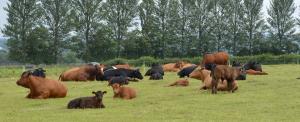
Good management during the weeks after calving is essential if autumn calving suckler herds are to remain on track to achieve the target of a calf per cow per year. Achieving such a target relies on cows returning to oestrus quickly after calving and conceiving within a tight breeding window.
Rachel Megarrell, CAFRE Beef and Sheep Adviser, explains: "The period immediately after calving has a major influence on future fertility. Attention to cow nutrition, body condition score and health can help cows return to service sooner, improving conception rates and also in turn helping farmers meet DAERA Suckler Cow Scheme targets."
Prioritise body condition and nutrition
The nutritional demands of lactation increase significantly after calving. Cows that lose excessive body condition during this period can experience delayed return to oestrus, reducing the likelihood of conceiving early in the breeding season.
Autumn calving cows should ideally maintain a body condition score (BCS) of 2.5 to 3.0. Regular condition scoring can help identify animals that require additional nutritional support before fertility is affected.
Silage quality has a major influence on post-calving performance. Farmers are encouraged to analyse silage and balance diets to meet energy and protein requirements. Where forage quality is poor, supplementary feeding may be required to maintain performance and minimise condition loss.
Autumn calving cows often face housing for a significant part of the breeding season. Adequate feed space, unrestricted access to water and careful ration formulation are essential to maximise dry matter intake and support fertility.
Attention should be paid to first-calving heifers, which have additional nutritional requirements for growth. Regardless of whether cows are calving in spring or autumn, avoid major changes in the ration between six weeks before and after the service period.
Monitor cow health
Health issues around calving can have a lasting impact on fertility. Difficult calvings, retained placenta, metritis and other uterine infections can delay reproductive recovery and reduce conception rates.
Cows should be monitored closely during the weeks following calving and veterinary advice sought where problems are identified. Early intervention can improve recovery rates and limit the impact on fertility performance.
Prepare for breeding
For cows to maintain a 365-day calving interval, they must return to oestrus and conceive again within a relatively short timeframe after calving. Good nutrition, health and body condition management all contribute to achieving this objective.
Farmers should observe cows carefully for signs of heat and ensure breeding plans are in place well before the start of the breeding season. Identifying and addressing potential fertility issues early can help improve submission and conception rates.
Give first calving heifers special attention
First calving heifers require additional management as they are still growing while supporting a calf and preparing for their next breeding cycle. These competing demands place them at greater risk of losing body condition and experiencing delayed fertility.
Separating heifers from mature cows can help ensure they receive adequate nutrition and allow them to be managed according to their specific requirements.
Autumn calving herd checklist
At calving
- Monitor cows closely and provide assistance where required.
- Record calving dates and any calving difficulties.
0-30 days after calving
- Assess body condition and adjust feeding where necessary.
- Monitor cows for retained placenta, uterine infections and other health issues.
- Ensure adequate mineral supplementation.
30-60 days after calving
- Continue monitoring body condition and calf performance.
- Identify cows that may require additional nutritional or veterinary attention.
Before breeding begins
- Ensure cows are cycling and in suitable body condition.
- Review breeding plans and monitor for signs of heat.
- Pay particular attention to first-calving heifers.
Throughout the post calving period, regular performance recording and review are essential. Monitoring calving dates, conception rates, calving intervals, body condition and herd fertility records can help identify problem cows before they compromise herd performance. By maintaining cow health, ensuring adequate nutrition and implementing effective breeding management, farmers can improve fertility, achieve tighter calving intervals, increase herd productivity and maximise payments available through the DAERA Suckler Cow Scheme.
The Suckler Cow Scheme within the Sustainable Agriculture Programme, provides financial support to beef farmers who adopt practices aimed at improving herd performance and reducing greenhouse gas emissions.
For the current Suckler Cow Scheme Year (up to the 31 March 2027) the maximum age at first calving is 32 months and the maximum calving interval is 405 days.
Under Scheme Year 3 (1 April 2027 to 31 March 2028) farmers will be required to achieve progressively tighter performance targets to secure payment. For age at first calving, a heifer's first calf must be born when the animal is between 21 and 31 months of age inclusive. The calving interval target will also reduce. To be eligible, the interval between successive calving events must be between 271 and 395 days inclusive.
Important: Farmers should note that while an ineligible calving event will not attract a payment, it will still be used in the calculation of the next calving interval. This means a subsequent calving event may still qualify for support if it meets the following Scheme Year requirements.
If you would like further information and guidance, then please contact your CAFRE Adviser through your local DAERA Direct Office.
Notes to editors:
- Follow DAERA on X formerly called Twitter and Facebook.
- All media queries should be directed to the DAERA Press Office: pressoffice.group@daera-ni.gov.uk or telephone: 028 9016 3460.