Winter feeding planned? Now calculate the cost
Date published:
With silage quality assessed, forage supplies measured and concentrate requirements calculated, dairy farmers should now put a financial budget around their winter plans.
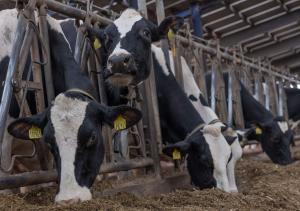
The College of Agriculture, Food and Rural Enterprise’s (CAFRE’s) benchmarking shows why knowing the cost of every litre produced is essential to protecting margins.
By this stage of the autumn, every dairy farmer should have assessed silage quality, measured winter forage supplies and calculated likely concentrate requirements. This provides the basis for a realistic feed budget and a sound estimate of likely milk output and costs.
But planning should not stop at tonnes of silage, kilograms of concentrate or litres of milk. Farmers must now also ask: what will that milk cost to produce?
Winter is a significant period of feed and input use. It is therefore an important time to examine physical and financial performance, identify avoidable costs and protect margins.
CAFRE benchmarking highlights the opportunity
CAFRE financial benchmarking allows dairy businesses to assess how efficiently they convert feed, forage, energy, labour and capital into profitable milk.
Dairy benchmarking analysis shows a difference of approximately 9.35 pence per litre in average cost of production between the top and bottom 25% of benchmarked businesses. Those farms with lower cost of production have a greater capacity to withstand fluctuations in milk prices and input costs.
Milk price alone does not explain the difference in performance between the top and bottom 25%. The variation in milk price between the two groups is actually relatively small, while the differences in physical performance, production costs and margin are much greater.
Although the average yield was approximately 8,583 litres per cow among the top 25% of those farms benchmarked on a net margin basis, compared with 6,294 litres among the bottom 25% there is also a significant range in milk yields in each of these top and bottom 25% categories. There are farms producing over 10,000 litres per cow who fall into the bottom 25% on a net margin basis and also many farms producing less than 7000 litres per cow operating in the top 25% category.
Higher output does not automatically deliver greater profit. What matters is whether the additional milk and milk solids are produced efficiently and economically.
Focus on return
Benchmarking is not simply about finding the lowest cost in every category. Some expenditure delivers a worthwhile return.
Investment in additional concentrate feeding, forage production, preventative animal health and technology are all justified when it improves, efficiency or margin. Farmers should therefore ask not only, “How much am I spending?”, but also, “What return is the business getting from that expenditure?”
Energy provides a useful example. CAFRE benchmark data shows that energy costs ranged from approximately £9 to £74 per cow. Across the average 130-cow herd, this represents a difference of around £8,450 per year.
Farm layout, scale and milking system will influence energy use, so a higher cost does not necessarily indicate poor management. Nevertheless, farms at the upper end of the range should review electricity tariffs, water heating, plate-cooler performance, milk cooling, vacuum-pump operation and lighting to identify unnecessary consumption.
Turning information into action
Know what you have. Know what you need. Know what it will cost.
The value of benchmarking lies not in the figures themselves, but in the action taken in response. Better-performing businesses use benchmarking to identify and protect the factors driving their performance.
Lower performance is rarely caused by one major item. Smaller gaps in forage quality, feed efficiency, herd performance, machinery, energy and overhead costs can combine to substantially reduce margin.
CAFRE’s financial benchmarking, Dairy Margin Over Concentrate and cash-flow planning resources can help farmers assess performance, identify priorities and monitor whether changes are delivering a financial return. Information on these tools, including how to access them, is available through the Business Support area of the CAFRE website.
This winter do not simply calculate how much milk you expect to produce. Understand what it will cost to produce it and where improved efficiency could protect your margin.
Notes to editors:
- Follow DAERA on X formerly called Twitter and Facebook.
- All media queries should be directed to the DAERA Press Office: pressoffice.group@daera-ni.gov.uk or telephone: 028 9016 3460.