Muir launches strategy to address seabird species decline in NI
Date published:
DAERA Minister Andrew Muir has launched a new conservation strategy to address the growing crises facing seabird populations, marking an important step in efforts to protect and restore these globally important species.
Across our coasts, many seabird species are experiencing sharp declines due to a combination of pressures, including climate change, food shortages, pollution, invasive species and disease. Without urgent and sustained action, further losses are inevitable.
The Northern Ireland Seabird Conservation Strategy 2026-2035 aims to improve the conservation status of 30 priority species of seabird that frequently occur in Northern Ireland waters, including breeding species and wintering waterbirds. It sets out a clear framework for action from strengthening protection and monitoring, to restoring habitats and reducing pressures at sea and on land.
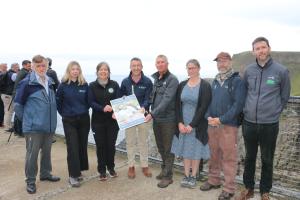
The DAERA Minister launched the Strategy during a visit to Rathlin Island, where he received an update on the LIFE Raft project, a conservation success that comes from the world-first eradication of the non-native ferrets which had been harming the seabird population there.
DAERA Minister Muir said: “Northern Ireland’s coastlines and waters are home to many internationally significant and much loved seabirds, such as the puffin, gannet and razorbill. They are a wonderful part of our natural world, but they are under unprecedented pressure, impacted by food shortages, invasive species, climate change and devastation through Avian Influenza.
“Action is needed to halt the further decline of seabirds, improve resilience and make steps towards recovery. We can take hope from the work of the LIFE Raft project here on Rathlin which is a truly inspiring nature restoration project led by RSPB NI, with support from the Rathlin Development Community Association and other partners. This will have a transformative impact on the fortunes of seabirds and has already led to the return of Manx shearwaters after a 20-year absence.
“This Strategy sets out the actions that will be undertaken to protect and restore these important species over the next decade. We developed it with NGOs and the marine and fisheries industry, and now we must continue working together to deliver it.”
The Strategy has been developed through close collaboration across the environmental, marine and fisheries sectors, ensuring that it is grounded in the best available evidence and shaped by those working directly in seabird conservation. By bringing together expertise across sectors, the Strategy reflects a shared understanding of both the challenges and the solutions required.
Joanne Sherwood, RSPB NI Director said: “Northern Ireland’s first Seabird Conservation Strategy is a welcome milestone, and the first step in delivering at the scale which is now urgently needed. Seabird populations have declined by over 60% in the last two decades, so this strategy must be properly resourced to turn ambition into action.
“RSPB NI is already working with partners to restore seabird populations, strengthen biosecurity on islands where seabirds breed, and protect key species, all supported by research to better understand and safeguard vital marine habitats. We’re delighted to be here at the RSPB NI West Light Seabird Centre today, and look forward to working with DAERA and partners to drive this vital Strategy forward to secure a better future for seabirds.”
Addressing the seabird crisis will require coordinated action across government, industry, conservation organisations and local communities. This collective effort will ensure that the Strategy translates into meaningful, on-the-ground outcomes for seabirds.
The Northern Ireland Seabird Conservation Strategy 2026-2035.
Notes to editors:
- The Strategy builds on existing conservation frameworks and aligns with wider biodiversity and marine policies.
- The Strategy was co-designed with a range of key stakeholders and then subject to a 12-week public consultation, which opened on 23 September 2024.
- A synopsis of the consultation responses will be available on the consultation page, following the launch of the Strategy. This can be found at: https://www.daera-ni.gov.uk/consultations/consultation-seabird-conservation-strategy-and-action-plan-northern-ireland.
- The Strategy is also available at: https://www.daera-ni.gov.uk/publications/northern-ireland-seabird-conservation-strategy-2026-2035.
- It supports national and international commitments to biodiversity restoration.
- Implementation will be delivered through partnership working across sectors and administrations.
- About RSPB NI:
The RSPB is the UK’s largest nature conservation charity, with 1.2 million members and over 11,000 volunteers, all acting for nature. We protect and restore habitats and landscapes, save species and are helping to tackle the nature and climate emergency. For over a century we’ve been a voice for birds and the natural world, inspiring and influencing millions through conservation, powerful partnerships and campaigning. Our network of over 200 nature reserves sits at the heart of our world-leading science and conservation delivery. We want to see a shared world where wildlife, wild places and all people thrive. The Royal Society for the Protection of Birds (RSPB) is a registered charity. In England and Wales, no: 207076. In Scotland, no: SC037654. Northern Ireland is home to all sorts of wonderful wildlife, from lolloping Irish Hares to soaring Red Kites, not to mention stunning scenery as far as the eye can see. RSPB NI are working hard to make sure that the nature that calls Northern Ireland home is restored and protected for generations to come, working alongside farmers, landowners, policy changemakers, NGOs and more. - About LIFE RAFT:
The LIFE Raft (Rathlin Acting for Tomorrow) project is a £4.5 million partnership programme that launched in 2021 to remove invasive non-native rats and ferrets from Rathlin Island, protecting breeding seabirds and bringing socio-economic benefits to the island community. LIFE Raft is a partnership between RSPB NI; Rathlin Development and Community Association; Causeway Coast and Glens Borough Council; National Parks and Wildlife Service; Causeway Coast and Glens Heritage Trust; and the Department of Agriculture, Environment and Rural Affairs. This project is funded by EU LIFE, The National Lottery Heritage Fund; Garfield Weston Foundation; and DAERA. - Follow DAERA on X formerly called Twitter and Facebook.
- All media queries should be directed to the DAERA Press Office: pressoffice.group@daera-ni.gov.uk or telephone: 028 9016 3460.
- The Executive Information Service operates an out of hours’ service for media enquiries only between 1800hrs and 0800hrs Monday to Friday and at weekends and public holidays. The duty press officer can be contacted on 028 9037 8110.