Water pollution - causes and impacts
Water pollution poses risks to both public health and the environment, harming wildlife, disrupting ecosystems and local economies. Issues like Blue-Green Algae blooms in Lough Neagh highlight the dangers poor water quality poses.
Here you will find information that will help to explain the causes and impacts of water pollution. You can explore the guidance and educational materials below to support cleaner water for everyone.
Causes of water pollution: Drainage misconnections
Misconnections can lead to elevated nutrients, chemicals and bacteria in our waterways causing water pollution and contributing to algal blooms, degradation in bathing water quality and shellfish.
Find out how misconnected drains in your home can cause water pollution:
Causes of water pollution: Septic tanks
Septic tanks can contribute to nutrient and bacteriological impacts on water quality and can contribute to water pollution if they are not used and maintained appropriately.
Learn more about how septic tanks work and how to look after them properly to prevent them causing water pollution:
- Stop the leak: Simple steps to prevent septic tank pollution
- Private Sewage Treatment Systems Care and Maintenance: A Guide for Homeowners
- Septic tanks leaflet - NIEA and NetRegs
Watch this short animation to find out more about looking after your septic tank to help prevent it from causing water pollution
- Septic tanks information - nidirect
- Maintaining your septic tank - NetRegs
- Arrange septic tank emptying - NIWater
Causes of water pollution: Invasive Species
Lough Neagh is under existing and emerging threats. Some non-native species are brought into the country accidentally but some are released unknowingly. Most non-natives are harmless, but a small percentage become invasive, damage our ecosystems and cause real problems. Some compete with our native species by growing more quickly.
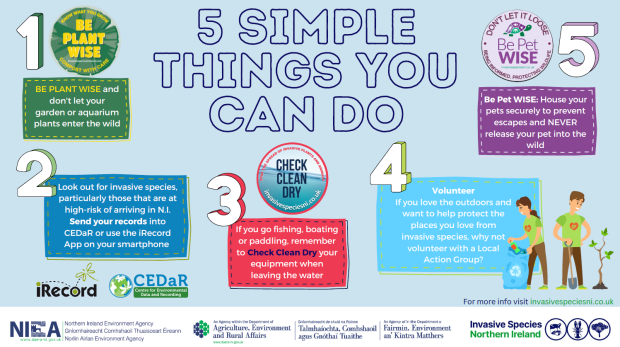
Among the emerging threats is the Zebra Mussel with its origin in Eastern Europe. The Asian Clam and Quagga Mussel are also being found in Lough Neagh and on its shoreline. We all have a responsibility to look after Lough Neagh and report any sightings of invasive species.
Read more and download useful resources from the Invasive Species Northern Ireland website: Invasive Species Northern Ireland – Invasive Species Northern Ireland.
Learn about invasive species and why they’re an issue for our waterways in this video featuring Rose Muir from the Northern Ireland Environment Agency
Impacts of water pollution: Blue-Green Algae
Lough Neagh, the largest freshwater lake in the UK and Ireland, forms part of a wider aquatic ecosystem, from its surrounding catchment area to the rivers which flow into it and flow out to the north coast.
In recent years, Lough Neagh has faced increasing pressures and, in 2023, an unprecedented Blue-Green Algal bloom appeared, generating substantial public interest.
Read more about the impacts of Blue-Green Algae on Lough Neagh at About Blue-Green Algae.
- Blue-green algae in the water environment (factsheet) - NIEA and NetRegs
Watch this video to learn more about Blue-Green Algae, including how to recognise and report potential sightings and what you should do if you think there is Blue-Green Algae present in a water body.
- Got a question about Blue-Green Algae? Read our FAQs
Lough Neagh Partnership videos
- Blue Green Algae - find out more about the causes and impacts of Blue-Green Algae on Lough Neagh.
- Climate Change - the temperature of Lough Neagh is increasing more than the temperature of the land. Learn more about the impact of climate change here.
- Tackling Invasive Species - learn more about innovative methods being used to tackle the spread of invasive species on Lough Neagh