Know your drains and help prevent water pollution
Did you know that if your household drains are not properly connected, you could be causing water pollution and damaging the environment?
Northern Ireland Environment Agency’s Incident Hotline regularly receives reports of water pollution caused by improper use of household drains. It’s a simple issue to fix and can help protect the environment.
For most houses built after 1970, wastewater from toilets, sinks, washing machines and dishwashers drains into a separated sewer system, which takes it to the local wastewater treatment works. Rainwater from roofs, driveways and roads is collected in a surface (storm) water drain, which goes directly to rivers and beaches.
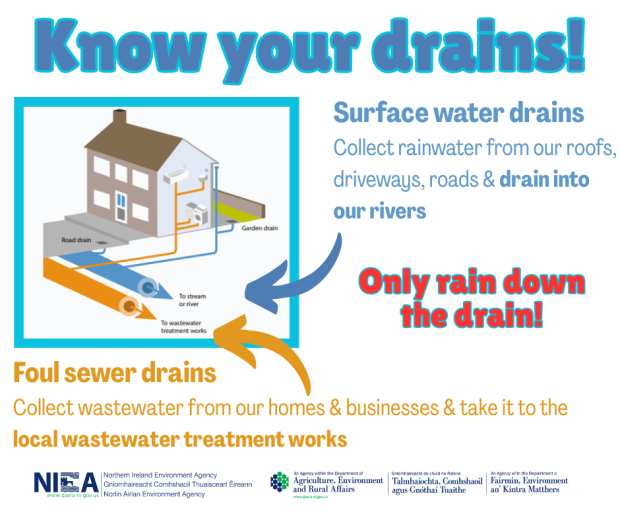
How can drains cause pollution?
Misconnections happen where a ‘foul wastewater flow’ (eg from a sink, toilet, dishwasher or washing machine) is wrongly connected to a surface (storm) water drain – this results in untreated wastewater going directly to your local river or beach causing pollution.
Similarly, if gutters and gulleys are wrongly connected, they will be sending clean rainwater into the foul wastewater drain, potentially overwhelming them causing out of sewer flooding with untreated wastewater going directly to rivers and beaches.
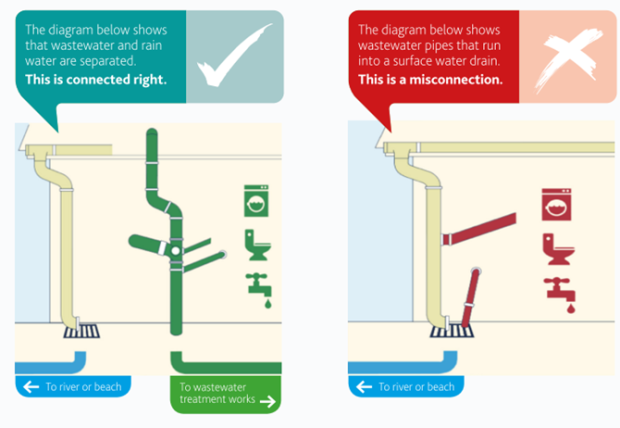
What can I do to prevent pollution from my drains?
Check you have the right connection in your home for all surface water and foul (wastewater) plumbing. More information can be found on NI Direct at Connecting your home to the right drains | nidirect. If you are unsure what to do, you may need to ask a qualified plumber to help.
Do:
- Identify all the storm drains on your property.
- Connect toilets, sinks, baths, washing machines or dishwashers to the foul water drain.
- Check your drains, if they are wrongly connected, put them right.
- Make sure your drains are unblocked to allow only the rainwater to flow through.
- Ensure that if you are buying a house, there are no wrong connections. Ask your surveyor or contractor to include this in their survey report.
Remember – only rain down the drain!
To avoid blockages, never:
- Dispose of cooking fats, oils and greases, motor oil, chemicals, paint and detergents to surface water drains or road gullies. Instead use your local household recycling centre (find details on your local council’s website – available on NIDirect).
- Store any chemicals, oils, detergents, or other pollutants beside a storm drain.
- Dispose of water from washing your car down a storm drain.
- Dispose of household items such as nappies, cotton buds, razors, sanitary items and syringes down the toilet as this waste goes to foul water drains which then go to wastewater treatment works. Use your household bin to dispose of these items safely and hygienically.