Omagh Anglers deliver improvements to local water quality
Over the past two years, Omagh Anglers Association (OAA) has led a number of projects to improve habitat and water quality in the local area, thanks to funding from the Carrier Bag Levy. The Department of Agriculture, Environment and Rural Affairs (DAERA) Water Quality Improvement Strand (WQIS) grant was used, in addition to club membership fees.
Established in 1943, Omagh Anglers Association (OAA) is one of the oldest in Northern Ireland, operating across the Drumragh, Camowen, Strule and the Owenkillew Rivers. OAA has recently taken forward initiatives designed to protect and improve local rivers, with the support of Water Quality Improvement Strand grant funding delivered by the Northern Ireland Environment Agency.
The improvement of river habitat through the WQIS funding means that young salmon now have a better chance of thriving, as their habitat has improved and oxygen levels have increased. Other positive benefits over time will include a reduction in weed growth, which was a predominant feature, especially in summer months, leaving the area less vulnerable to fish kills as a result of oxygen depletion.
Terry Smithson from Omagh Anglers Association explains how the Carrier Bag Levy funding was used to help improve local rivers:
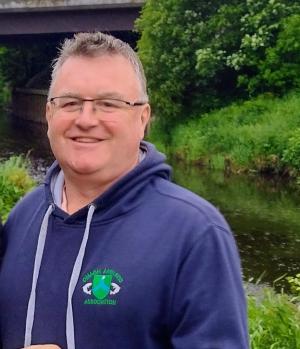
"The works that the grant funding from DAERA have allowed us to carry out have been an essential instrument for Omagh Anglers Association to try and promote the health of a local tributary of a major river system, namely the Foyle.
"The project has been a huge help in raising awareness of pollution, the results it has caused and how Omagh Anglers and DAERA are working together to make improvements in terms of spawning beds and nursery streams and assisting in the campaign to try and prevent further decline in salmon numbers.
"We are extremely grateful for the funding received and the work we carried out on this once heavily polluted area is already noticeable".
Improvements to the Owenreagh River
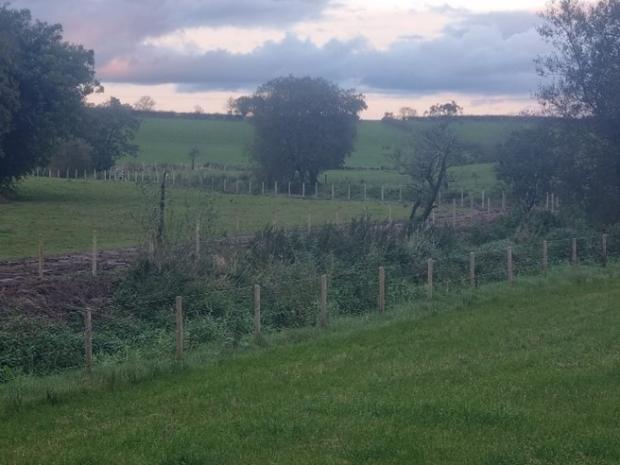
In 2023/24, the club used the WQIS funding to erect 860m of fencing, with landowner’s permission, along the Owenreagh River. Coupled with tree planting, this area, now free from grazing livestock, formed a natural riparian strip – offering numerous environmental benefits.
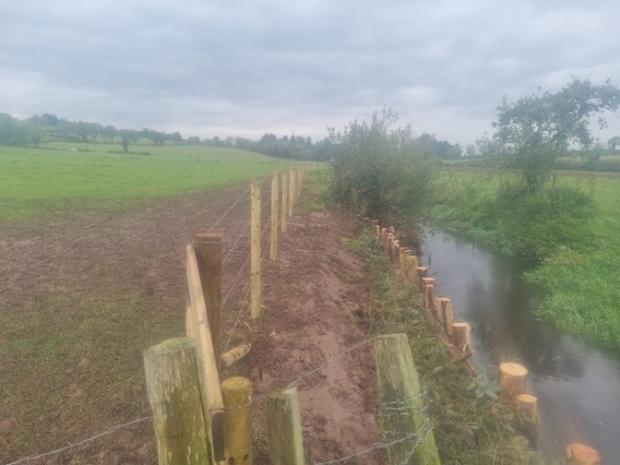
The establishment of tree roots enhanced riverbank stability, reducing erosion and sediment run-off into the watercourse. Trees and other riparian flora also trap excess nutrients and provide shade for the river, reducing the risk of overheating. Additionally, the riparian strip itself functions as a wildlife corridor, boosting biodiversity in the area.
The club also installed 14 horseshoe groynes – a type of structure in the river, to help divert flow and increase oxygenation in the river.
Alongside plumbstones which provided shelter for the young salmon and trout, these additions to the river helped to increase water flow and introduce more oxygen into the system, turning a previously deep and slow river into one more suitable for fish spawning and nursery habitat.
Enhancing the Aghlisk River through community engagement
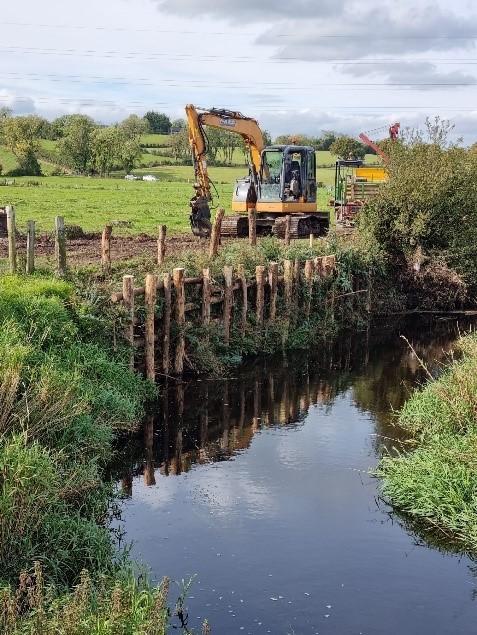
Further WQIS funding obtained in 2024/24 enabled OAA to build on the success of its previous project and install a further 950m of fencing along the Aghlisk river, along with 30m of revetments - structures to prevent bank erosion taking place that could lead to siltation of spawning beds. As a result, riverbank erosion was reduced and the siltation of vital nursery habitat downstream was improved. Additionally, vortex groynes, another in river structure used to help increase oxygen flow, were used to increase water flow rates, reducing potential weed growth during summer months.
Throughout both projects, the OAA worked closely alongside farmers and landowners. This enabled them to act as stewards of their local waterways as well as educating them on ways to improve farming practices to aid water quality.
Sharing best practice through outreach
The club also used its website and social media page to promote the work it was doing - bringing attention to the issues facing local rivers to other anglers and the wider public, but also to the ways they can help. Members found that, following the projects, the restoration sites have attracted lots of interest. They serve as shining examples of the positive impact restoration can have on water quality, freshwater habitat, and biodiversity.
To find out more, or if you are interested in volunteering, visit: Omagh Anglers Association.