About Blue-Green Algae
Read more about Blue-Green Algae and its impact on Lough Neagh.
The Cyanobacteria found on Lough Neagh is a natural component of plankton and plays an important ecological role. It produces oxygen and supports the food chain. It would typically have favoured lower light conditions and lived under the surface of the water. However, a combination of factors, including climate change, nutrient run-off from agriculture and wastewater, and invasive species like zebra mussels are considered to have influenced conditions within the Lough.
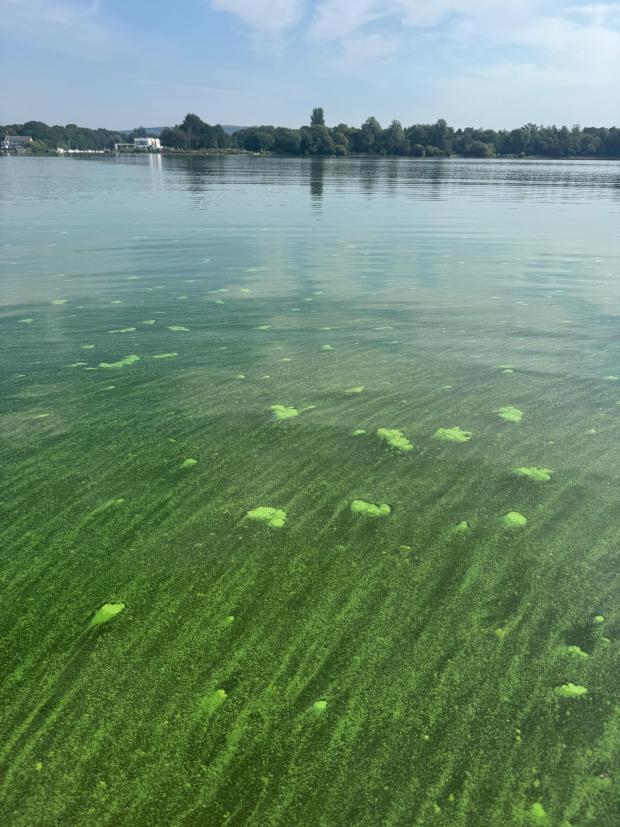
As conditions have changed, newer species like Microcystis and Anabaena have become more prevalent, forming surface scums during warm, calm spells.
In 2023, the unprecedented bloom associated with warming waters, still weather, and decades of nutrient build-up in lakebed sediments. These blooms can affect aquatic life and may produce toxins that can pose risks to people, pets, livestock and wildlife.
Scientists from Queen’s University and AFBI have been studying Lough Neagh since the 1960s and since the recent algal bloom, research activity has increased.
Current research by PhD students includes satellite tracking of bloom history, molecular genetics, ecological modelling, and the exploration of nature-based solutions like reforestation, wetland restoration, and riparian buffers, to help reduce nutrient run-off.
Lough Neagh is an important natural asset, and continued research, monitoring and collaborative action will contribute to a better understanding of the challenges it faces and the measures that can support its recovery.