Private Sewage Treatment Systems Care and Maintenance: A Guide for Homeowners
Find out how to look after your Private Sewage Treatment System to keep it working properly and prevent it from causing water pollution.
What is a private sewage treatment system?
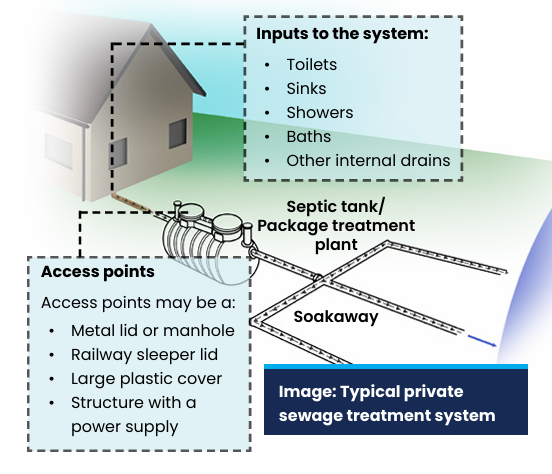
Usually found in rural areas, a private sewage treatment system is a way of dealing with wastewater from your home if you are not connected to the public sewer. The most common types of private sewage treatment systems are septic tanks and package treatment plants. Septic tanks should discharge to a soakaway. Package treatment plants may discharge to a soakaway or a waterway.
Following some simple steps can help to ensure your private sewage treatment system is working properly and prevent it from causing water pollution.
The Northern Ireland Environment Agency, with the support of NetRegs, has this advice for householders with a private sewage treatment system.
What should go into a private wastewater treatment system?
Only domestic wastewater from toilets, sinks, showers, baths and domestic appliances should discharge to the private wastewater system. Homeowners should ensure that waste from their washing machine is correctly connected to the wastewater system rather than the stormwater system. This is a common drainage misconnection that may cause water pollution, especially when a washing machine has been fitted in a garage or outbuilding.
Further guidance on connecting your home to the right drain and preventing misconnections is available at Connecting your home to the right drains | nidirect.
What shouldn’t go into a private sewage treatment system
A private sewage treatment system works by allowing bacteria to break down the contents, so it’s important that nothing enters the system that could prevent that process from working.
Too much water
- Ensure downpipes and drains that carry rainwater are not connected to your system – this could wash out the contents before it is broken down (fully treated) and cause pollution and health hazards.
- Don’t overload the system – think about how much water is leaving your house at any one time and keep it to a manageable flow e.g. don’t shower while running the washing machine. This prevents too much water entering the system at the same time and flushing out untreated waste.
Too little water
- To work properly your private sewage treatment system should have a regular inflow of sewage or wastewater. Consistent use keeps the beneficial bacteria alive and active, allowing them to efficiently break down waste. Long periods without wastewater can reduce bacterial activity, leading to poorer treatment performance, unpleasant odours and longer recovery times when the system is brought back into regular use. If your system has been unused for a time, try to let frequent small amounts of wastewater enter at first to revive the system.
Chemicals that stop the bacteria working
- Excessive use of bleach can kill beneficial bacteria that your wastewater treatment system relies on to break down waste, reducing treatment efficiency
- Do not put bleach, paint, disinfectants, garden pesticides, medicines, solvents like white spirit and drain cleaning and unblocking liquids that contain caustic soda down your household drains.
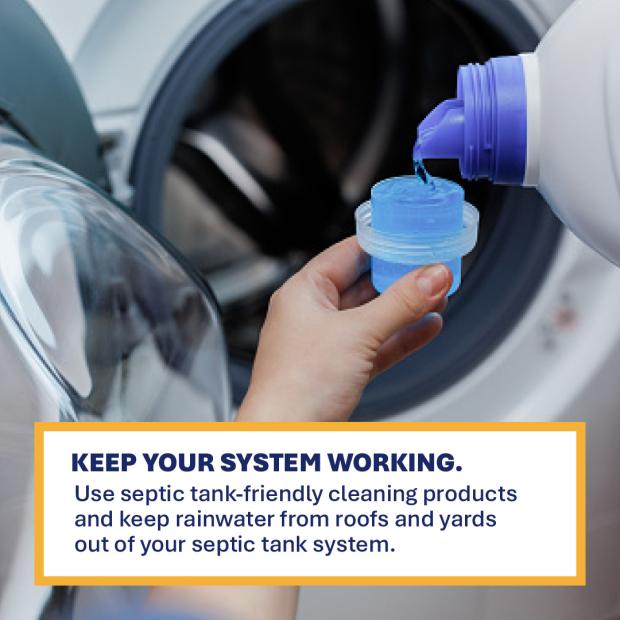
- Use cleaning products that have been specially designed for use with private sewage treatment system.
Fats, oil and grease
- These should never be put down household drains as they will solidify and clog pipes and drains.
- They do not break down during the treatment process and may accumulate forming a thick scum in the settlement tank. Fats may also interfere with the treatment process, cause foul odours and increase maintenance costs.
- Fats and oils that enter the soakaway can block the outlets and prevent soil bacteria working.
Other household items
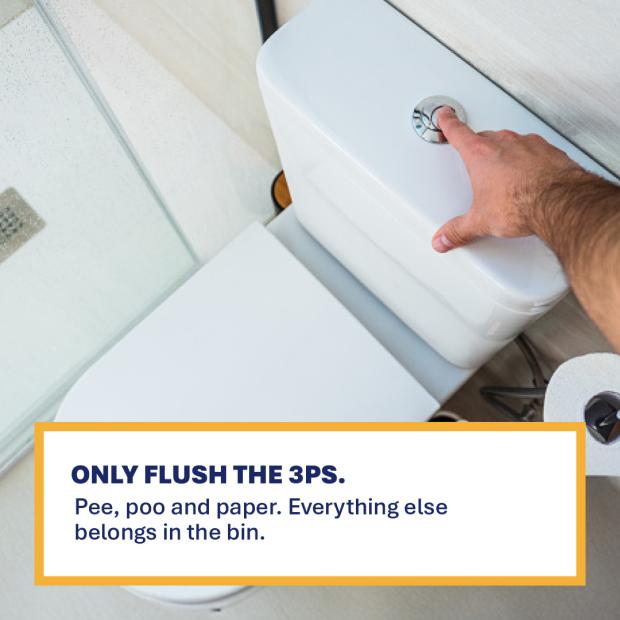
- Remember the three Ps – only pee, poo, and paper should be flushed down the toilet.
- Other items (such as wipes, nappies, sanitary waste) won’t break down.
Detergents that contain phosphates
Phosphates act as a nutrient for blue green algae. When excessive phosphates enter rivers, lakes or coastal waters, they encourage rapid algal growth which may lead to the development of harmful algal blooms
- Phosphates are not broken down in a private sewage treatment system, so they pass through and may end up in watercourses.
- Use phosphate-free cleaning products.
Maintaining your private sewage treatment system
How to check your system
To keep your private sewage treatment system working properly, it’s important it’s well maintained.
- Carry out a fortnightly or monthly visual check on the discharge from the system – your private sewage treatment system should have an inspection chamber between the tank and the soakaway and the discharge should be clear, not containing any solids.
- Check the level of liquid in the tank. If it’s very low, your tank could have a leak. If it’s very high, then you may have a blocked outlet pipe.
- Check the ground around the soakaway. Make sure it isn’t saturated, and that there is no strong odour.
- Check nearby watercourses to ensure there is no water pollution or odour associated with the system.
- Keep access to your system clear.
- Don’t operate heavy machinery or drive vehicles over the ground where the pipes are, or the soakaway.
- Don’t allow trees or deep-rooted shrubs to become established close to your private sewage treatment system or soakaway as the roots can damage pipework, causing leaks or blockages.
Signs of problems
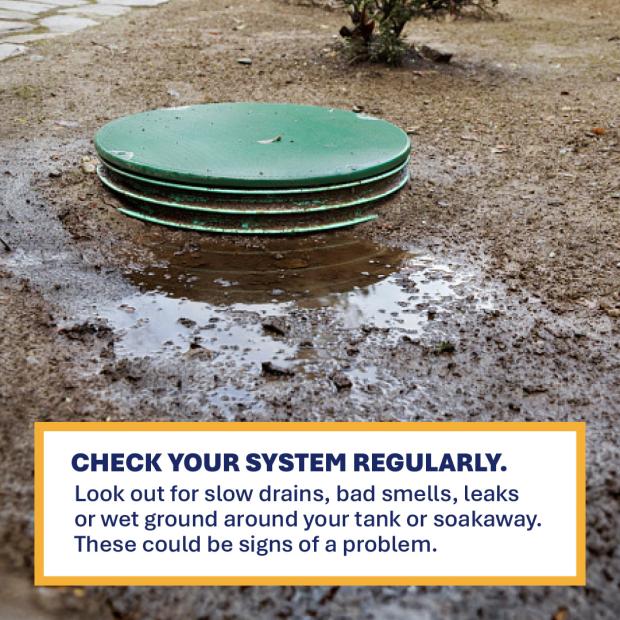
When checking your private sewage treatment system, you should be looking out for signs of problems, which may include:
- Sinks or toilets draining slowly or backing up.
- Strong odour from the soakaway with damp ground visible and a flush of green grass.
- Discharge from the system which is dark, contains solids or has an odour.
- Your system never needing to be desludged – this could indicate a leak or a burst pipe.
- No outflow from the system could mean blocked drains or a leak.
- Noticeable water pollution or odour from a nearby waterbody could indicate that untreated sewage may be coming from your private sewage treatment system.
If you notice any of these problems or think your private sewage treatment system may not be functioning properly, you should contact a specialist to investigate and fix the cause.
Private sewage treatment plant desludging
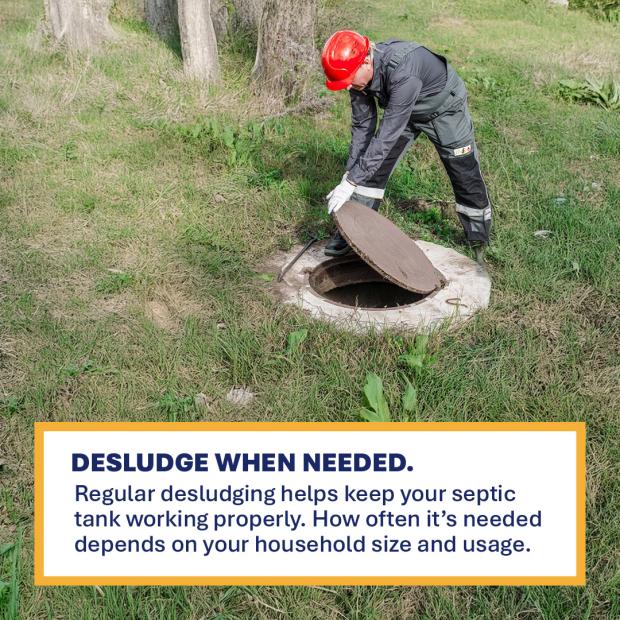
Over time the solids that settle out build up, effectively reducing the volume of the tank and making it less efficient. It is important that you get your private sewage treatment system desludged regularly to keep it working properly – how often this needs done will depend on household size and usage.
If you have a package treatment system, the unit should be maintained and serviced in accordance with the manufacturer’s specifications.
NI Water provides a free desludging service once every 12 months for customers who are not connected to the main sewer network, provided service conditions are met.
Request a desludge through the NI Water website or by emailing waterline@niwater.com.
Ensure your private sewage treatment system is legal
If you have a private sewage treatment system, you must have a consent from the Northern Ireland Environment Agency. It’s illegal to discharge any effluent into a waterway or water contained underground without having a consent under the Water (Northern Ireland) Order 1999. Those found guilty may face up to three months in prison and be fined up to £20,000.
To find out if your system has a consent, you can search the Domestic Consent Public Register. All domestic consents and maps for consents granted from 1992 to present are available to download.
Applying for Domestic Consent
If your property does not have a Domestic Consent, you can apply online to the Northern Ireland Environment Agency – follow this link for more information: Regulating water discharges | Department of Agriculture, Environment and Rural Affairs.
Further information
For further guidance on your private sewage treatment system, download this leaflet from the Northern Ireland Environment Agency: Looking after your private sewage treatment system | Department of Agriculture, Environment and Rural Affairs or visit NetRegs Septic tanks | NetRegs | Environmental guidance for your business in Northern Ireland & Scotland.