See it - report it! You can help be part of the solution to water pollution
The Water Pollution Response and Enforcement Team of the Northern Ireland Environment Agency plays the lead role in addressing incidents of water pollution. The team is on duty 24 hours a day, 365 days a year, including Christmas Day, and it is important for all members of the public to report incidents promptly so that NIEA can take appropriate action.
Reporting water pollution incidents
Urgent water pollution incidents, that require immediate attention, should be reported using the NIEA Incident Hotline on 0800 80 70 60, while other less urgent water pollution matters may be communicated to the team by emailing emergency-pollution@daera-ni.gov.uk.
Water pollution is transient in nature which means, the evidence trail can diminish very quickly, which can make it difficult to trace the source risking the ability to take formal enforcement action later on. This is why it’s critical for pollution incidents to be reported as soon as possible when they occur – don’t assume someone else will have already reported it!
In reporting an incident it’s helpful to share the following information:
- The exact location of the pollution incident – if you can, use https://what3words.com/ or give a full address or grid reference
- The nature of the pollution – what it looks / smells like, how much there is, whether it’s still happening or has stopped
- Your name
- A contact telephone number.
It’s really useful if you can send any photographs or videos of the pollution when making a report – email to emergency-pollution@daera-ni.gov.uk
Incidents may also be reported anonymously.
What does water pollution look like?
Water pollution isn’t always obvious. When you’re out walking near rivers, streams, lakes or beaches, keep an eye out for signs that something isn’t right.
Some sources of water pollution can include:
Sewage and wastewater – look out for discoloured water, sewage debris, unpleasant odours and excessive foam, which may indicate wastewater.
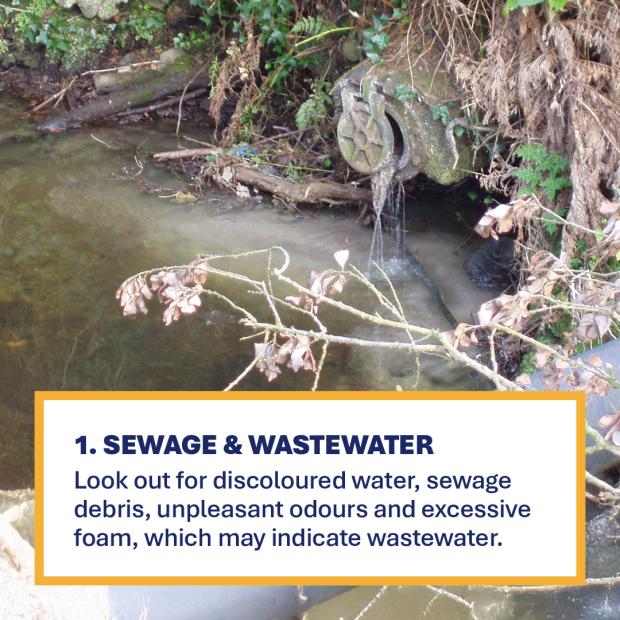
Sewage pollution Agricultural pollution – watch for silage effluent and slurry entering streams, murky water, strong farm waste smells, or signs of distressed wildlife.
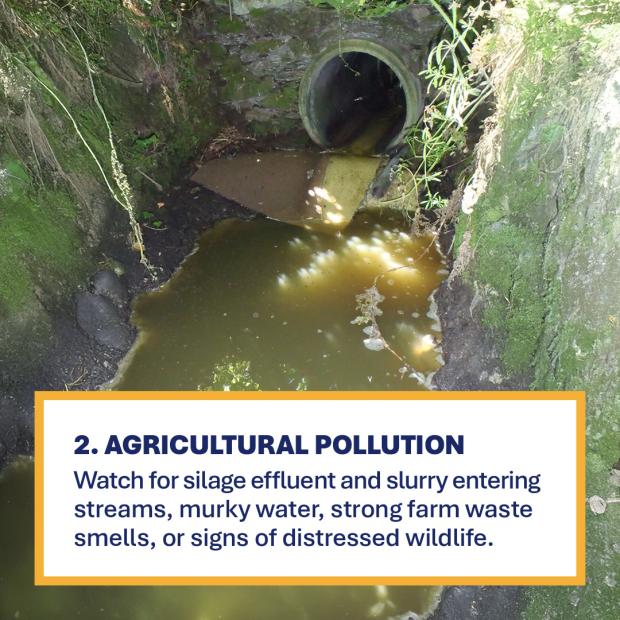
Agricultural pollution Oil, chemicals and fuel – be aware of rainbow-coloured sheens, chemical odours, oily staining, and impacts on fish or other aquatic life.
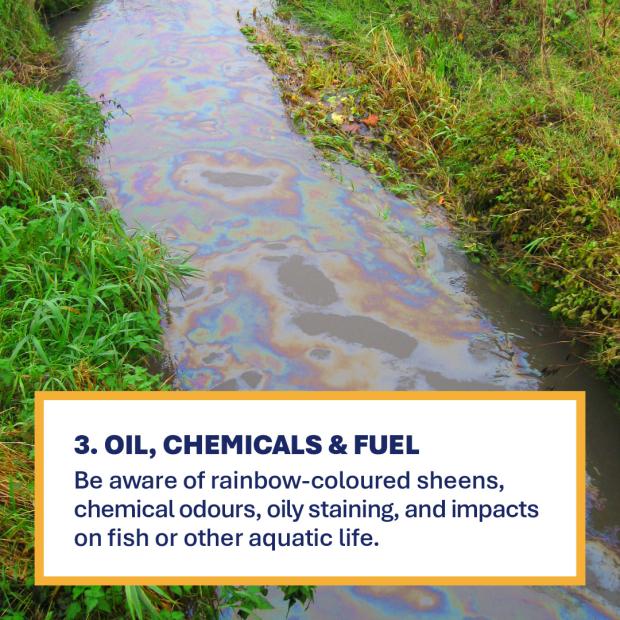
Oil pollution Industrial pollution – look out for unusual discharges from pipes or outfalls, unnatural water colours, excessive foam, or changes in water clarity.
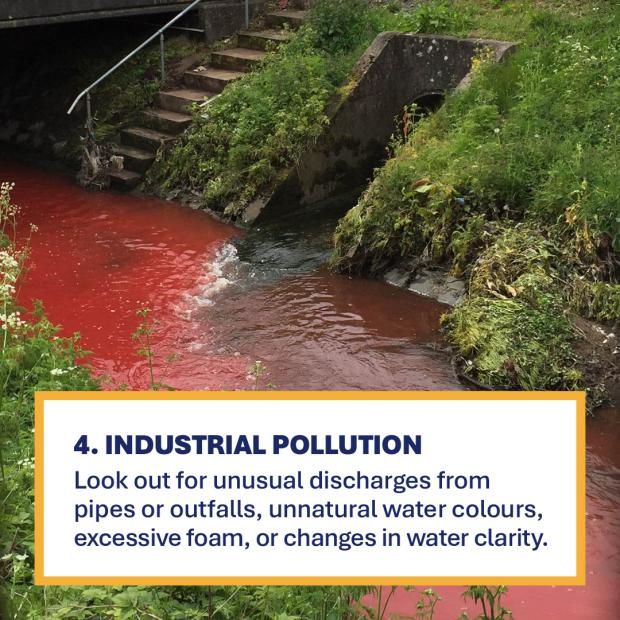
Industrial pollution Silt pollution – watch for cloudy or muddy water, excessive sediment building up on the riverbed, or soil washing into waterways.
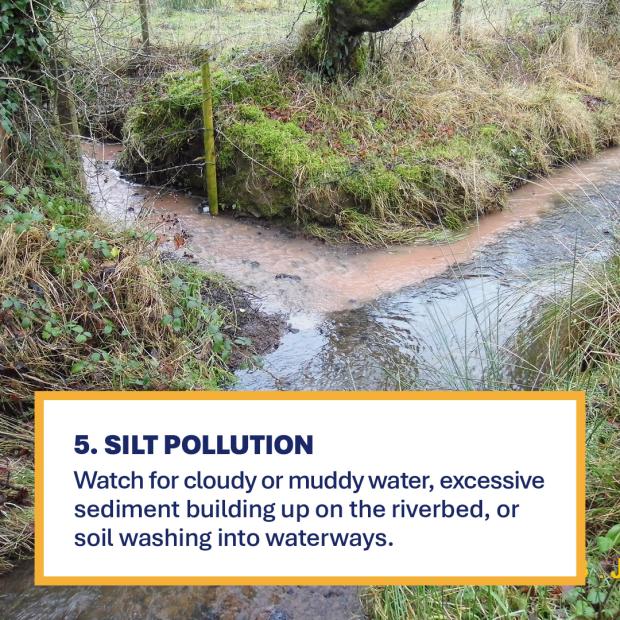
Silt pollution
What happens when an incident is reported?
When a call comes in through the NIEA Incident Hotline, a Water Quality Inspector is assigned to investigate the report. Inspectors are based across the country and all incidents are investigated.
The Water Quality Inspector will aim to find the source of the pollution, stop the pollution, identify the polluter and where necessary, collect sufficient evidence to allow appropriate enforcement action to be taken.
Consequences of water pollution
Water pollution can arise from activities which we don’t often think can have direct impacts on rivers and lakes. This can include impacts on water quality, wildlife and the amenity value of our waterways.
There can be significant financial and criminal implications for those responsible for pollution.
It is an offence to cause pollution of a waterway or groundwater, whether deliberately or accidentally. Those found guilty may face up to three months in prison, and be fined up to £20,000, or both. They may also have to pay court costs, the cost of ‘clean-up’ operations in line with the ‘polluter pays’ principle and even compensation to angling clubs if a ‘fish kill’ occurs. For corporate organisations, there is also the potential for significant negative publicity, which can result in reputational damage.
What you can do to help
As well as reporting any water pollution incidents that you become aware of, via the NIEA Incident Hotline or by email, you can help prevent water pollution by following these few simple steps:
- Stop and think, not down the sink: Don’t put oil, fat or grease into your sink or drain. For further guidance see the Proper Use of Drains leaflet.
- Check for misconnections: Make sure your plumbing is connected properly to ensure wastewater is going into the right drain. For further guidance visit Connecting your home to the right drains | nidirect.
- Ensure correct disposal of chemicals and paints: Dispose of chemicals, paints and used cooking oil at your local council household waste recycling centre. Find details at Recycling and reusing | nidirect.
- Look after your septic tank, if you have one, and keep it healthy: Make sure it’s properly serviced and empty it regularly. You must have a consent from the Northern Ireland Environment Agency – check if your property has one or you can apply online at Domestic Consents.
- Car wash care: Preferably wash your car at a dedicated facility, but if washing at home, make sure that soapy water doesn’t go into storm drains that lead to rivers. For further guidance see Connecting your home to the right drains | nidirect.
- Prevent litter: Litter can get washed into storm drains and directly into our waterways harming wildlife.
- Limit chemical and pesticide use and disposal: Never allow entry of chemicals or pesticides into any water system and don’t put them, or their packaging, into your bin unless the label says you can. Find out more at Stop and think about the water you drink PDF.
- Don’t flush it, bag it and bin it: Only the 3 Ps should go down the toilet – all other waste should be bagged and binned hygienically. Find out more at Bag it And Bin it - Northern Ireland Water.
For more guidance on preventing water pollution, download our Householder awareness: improving water quality in your local area leaflet.