The Battle Against Invasive Species: Why It Matters and How You Can Help
Invasive species are one of the five top reasons for biodiversity loss, as identified by the Intergovernmental Science-Policy Platform on Biodiversity and Ecosystem Services (IPBES). They can negatively impact on native species, can transform habitats and threaten whole ecosystems, causing serious problems to the environment and economy.
Closer to home, invasive species have been identified as having a part to play in the challenges facing Lough Neagh and other water bodies. The presence of the invasive zebra mussel has contributed to the creation of conditions that allow Blue-Green Algae to thrive. However, there are water bodies in Northern Ireland where Blue Green Algae thrives and there are no zebra mussels present, so there is no evidence of them being a causal factor alone.
Blue-Green Algae is generally the result of a combination of multiple negative environmental impacts, many of which are man-made and others climate related. Once established, invasive species are extremely difficult and costly to eradicate, and this may be impossible in the aquatic and marine environments, where their ecological effects are often irreversible.
The Northern Ireland Environment Agency (NIEA) has a dedicated Invasive Non-Native Species (INNS) Team, whose role is to minimise the risk posed by invasive species, reduce the negative impacts they cause and increase awareness and understanding of the risks and issues involved in tackling invasive species. They also have an important legal enforcement role.
The team shares the following information on why it’s important to reduce the risk from invasive species, and how everyone has a role to play.
What is an Invasive Species?
Many plants and animals have been introduced into Northern Ireland from all over the world. These are known as non-native species. Most non-native species do not cause problems, and some are even economically important to Northern Ireland. However, around 10-15% of these non-native species go on to spread and become invasive non-native species.
NIEA’s INNS Team focuses its efforts on invasive species. These include species that have been introduced through human activity (accidentally or deliberately) and have negative impacts on our wildlife and the environment, our economy, and our society. Some invasive species are also now arriving by natural expansion due to climate change.
Understanding the Impact of Invasive Species
Invasive species can have a serious and harmful impact on our wildlife, environment, our economy and wider society.
Environmental Impacts
Invasive species can impact on the ability of nature to provide ecosystem services such as the production of food and water. The impacts of invasive species on biodiversity are widely demonstrated and can occur in all habitats. This can include the following:
- Outcompeting native species for resources;
- Reducing native biodiversity by grazing on or blocking out native flora;
- Predation on native species and their young;
- Altering habitats which can lead to flooding;
- Introduction of parasites and pathogens which were not previously found here and against which our native species are not adapted to cope;
- Dilution of native gene pools by interbreeding with native species.
Economic Impacts
The introduction and subsequent spread of invasive species can have negative economic impacts on a variety of sectors including agriculture, forestry, fishing, tourism and transport. Once present, invasive species are incredibly difficult and expensive to eradicate. In 2021 they were estimated to cost the Northern Ireland economy £150 million.
Social Impacts
As well as having impacts on wildlife, the environment and the economy, invasive species may impact on our society, health, and way of life. There are a wide range of activities than can unintentionally spread invasive species such as gardening, water sports, angling and the keeping and trade of pets.
Invasive species have the potential to disrupt these activities as they transform the environment around us in the following ways:
- Invasive plants can take over a garden and spread into neighbouring properties;
- Invasive plants can prevent access to our rivers and lakes;
- Invasive species can restrict boating by interfering with navigation and colonising boat hulls and marinas;
- Anglers can have difficulty with tackle becoming entangled in invasive aquatic weeds;
- Non-native pets can escape and become established in the wild and impact on native species;
- Some invasive species spread disease, some can cause skin irritation and others can affect our respiratory system.
Help Stop the Spread of Invasive Species
Invasive species are one of the greatest threats to the environment, but with your help, we can make a difference.
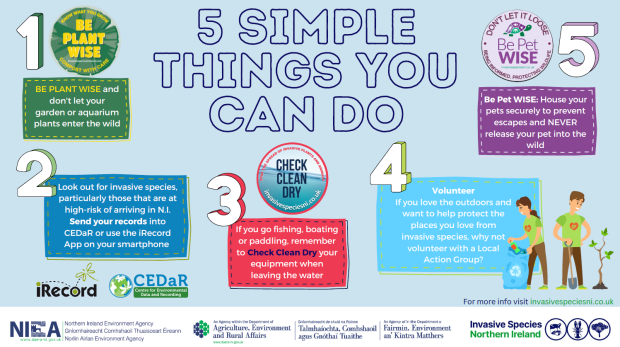
Five simple things you can do:
- Be plant wise, ensure you are not purchasing invasive plants, check out - Gardening-without harmful invasive plants booklet and don’t let any non-native plants already in your garden or ponds enter the wild. Find out more at Be Plant Wise Resources – Invasive Species Northern Ireland.
- Record. Look out for invasive species, particularly those that are at high risk of arriving in Northern Ireland. Send your records into CEDaR or use the iRecord app on your smartphone. Learn more about how to identify Invasive Species at Species Accounts – Invasive Species Northern Ireland.
- Check, Clean, Dry – if you go fishing, boating or paddling, remember to Check, Clean, Dry your equipment when leaving the water or before you take your equipment to another water body. Find out more at Check Clean Dry – Invasive Species Northern Ireland.
- Volunteer – if you love the outdoors and want to help protect the places you love from invasive species, why not volunteer with a Local Action Group to undertake activities such as ‘balsam bashing’.
- Be Pet Wise – house your non-native pets securely to prevent escapes and never release your pet into the wild. Make sure you do not keep, exchange or purchase species on the EU banned list. Find out more at Be Pet Wise – Invasive Species Northern Ireland.
NIEA Invasive Non-Native Species (INNS) Team
The NIEA INNS Team works with colleagues across the UK, Ireland, Isle of Man and the Channel Islands to share information and coordinate action on invasive species. They provide users with clear and up-to-date information and guidance on invasive species in Northern Ireland through the following channels:
Invasive Species NI website: Invasive Species Northern Ireland – Invasive Species Northern Ireland
Facebook: Invasive Species Northern Ireland | Belfast | Facebook
To raise awareness, the team provides educational talks to various groups and organisations and attends wider outreach events. They can be contacted to provide advice on matters such as invasive species identification, management, and prevention.
The INNS team can be contacted directly via:
Email: invasivespecies@daera-ni.gov.uk
Telephone: 028 9081 6685
The team has a wide range of resources available at Resources – Invasive Species Northern Ireland to provide more information for householders and relevant businesses on what they can do to help in the fight against invasive species.
For more information visit www.invasivespeciesni.co.uk.